By the time you get to day 3 of a WordCamp, the mindset shifts from taking in new information to figuring out how you’re actually going to use it. It’s fitting that today’s keynote kicked us off with an hour talking about how exactly to do that. The keynote’s excitement bled into the sponsor hall and all the places we gathered throughout the day. The overarching theme: what’s next?
Make Better Mistakes Tomorrow
Day 3 opened with a keynote from Loyal Pyczynski, a former executive at Walt Disney Imagineering and Meta. The session framed creativity and technology as a division of labor rather than competitors: focus on what you do best, source the rest, and protect the resource that actually matters: time. The central reframe was to make better, not fewer, mistakes tomorrow. Make the kind of mistakes that come from trying with intention instead of playing it safe. The talk turned personal from there, naming the vulnerability of creative work and imposter syndrome without hedging, which drew visible recognition from the room. The practical takeaway was to take inventory of what you are trying to do and what you are good at, resist the urge to let one piece of feedback blot out everything else, and build confidence by starting rather than waiting for the fear to pass.
The Room Where it Happens
Elsewhere in the convention center, the sponsor hall was lively on its first day open. Sponsors were busy talking with customers and potential customers and handing out swag. This year, some of the most popular swag items were activity-based: coloring postcards, watching a screen print demo, and taking photos in a photo booth.
The biggest story in this room, though, was the conversations between attendees. Overheard conversations spark new ones, new connections are made, and we all leave a little richer for it. This event went from being purely informational to being the biggest, nerdiest family reunion in short order by leaving room for others to join the conversation.
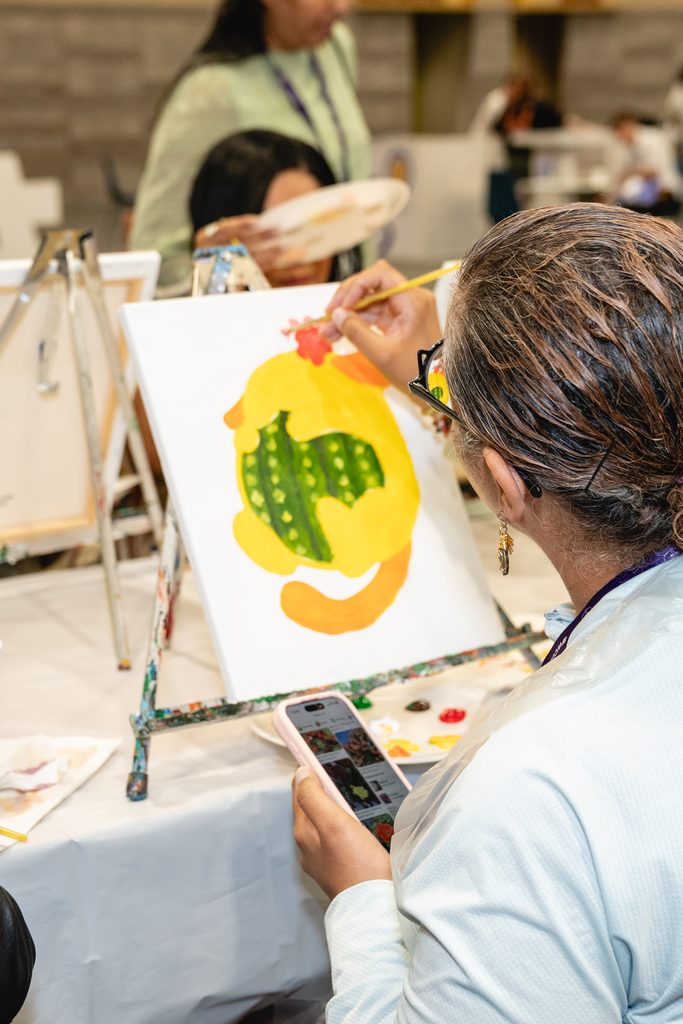
Paint a Wapuu
WordCamp US partnered with local Phoenix artist, Dina Murphy, and her business, The Painters Lounge (her site is on WordPress). Attendees could join a class to learn how to paint their own Wapuu. She’ll be back tomorrow to to lead a few more classes.
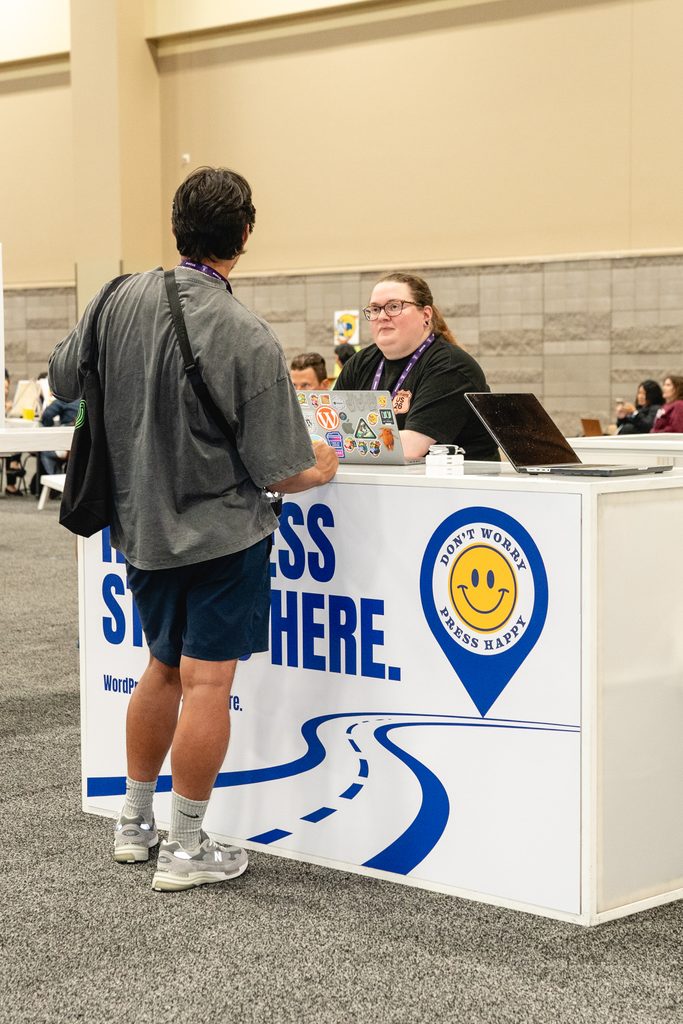
Happiness Bar
The Happiness Bar, a free, drop-in help desk, returned this year. Attendees could sit down with a volunteer WordPress expert and work through whatever’s been blocking them, from plugin questions to CSS issues, to ecommerce setup, and even “I don’t know where to start.” It’s consistently one of the most-cited reasons people say WCUS is worth attending.
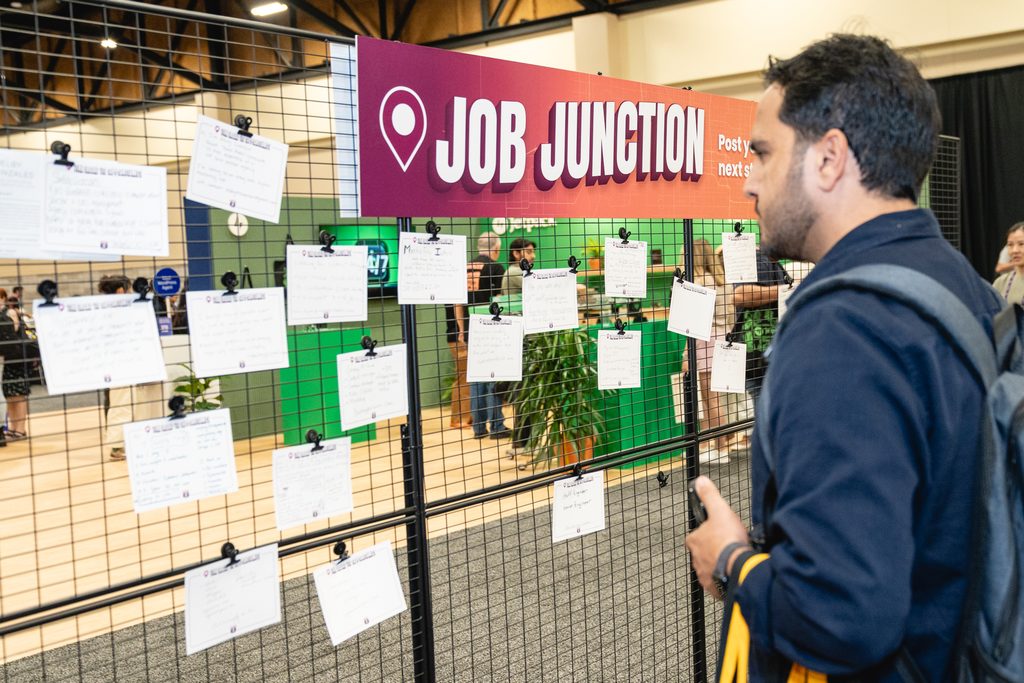
Career Corner
Career Corner sat inside the Sponsor Hall as a low-pressure space for anyone thinking about what came next. Attendees browsed the job board, talked with company reps during open hours, or simply got a sense of what companies were actually hiring for, with no appointments and no formal pitch required. Alongside the conversations, the space offered practical help: resume tips, interview framing, and a read on what the ecosystem needed right now.
Mercantile
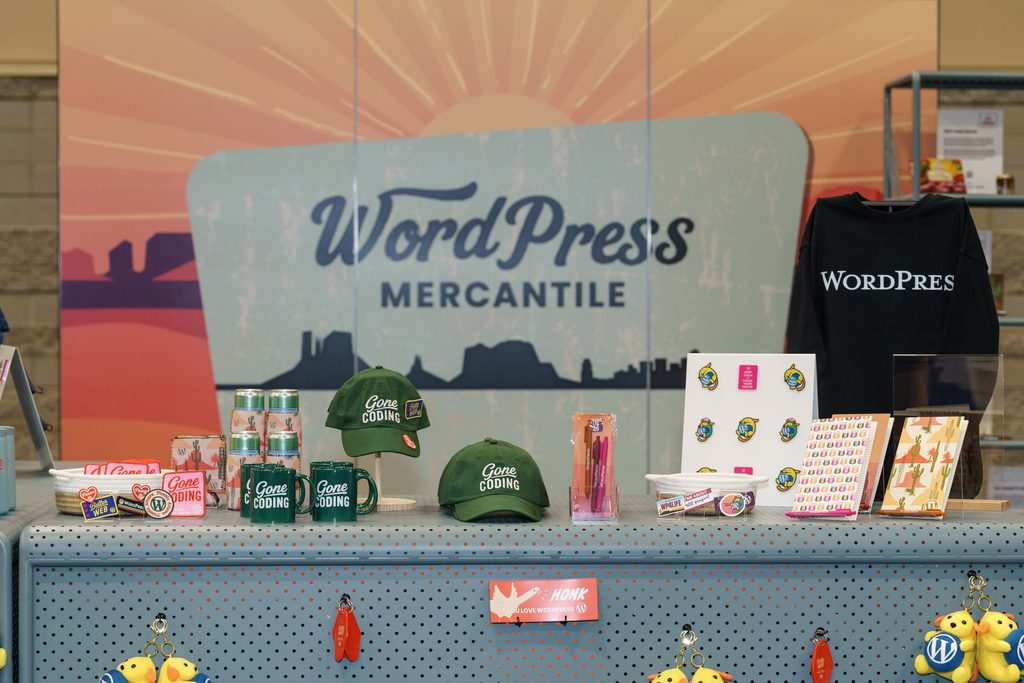
The Mercantile opened on site today, with attendees browsing store favorites alongside exclusive WordCamp US merchandise. This year’s limited-edition collection drew inspiration from a traveler’s journey down Route 66, blending Americana with the spirit of Phoenix.
Code for the People
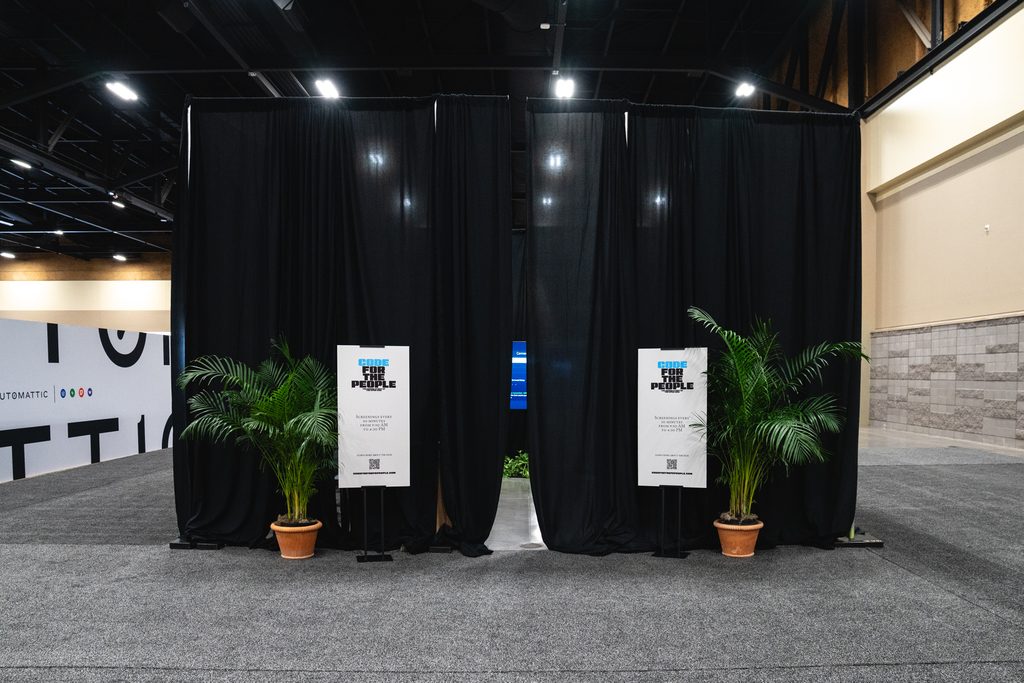
Code for the People, a documentary created by Bao Nguyen in collaboration with Automattic, has a screening room in the sponsor hall. The film invites attendees to learn about open source and get involved with the WordPress open source project.
Art Installation: Connect
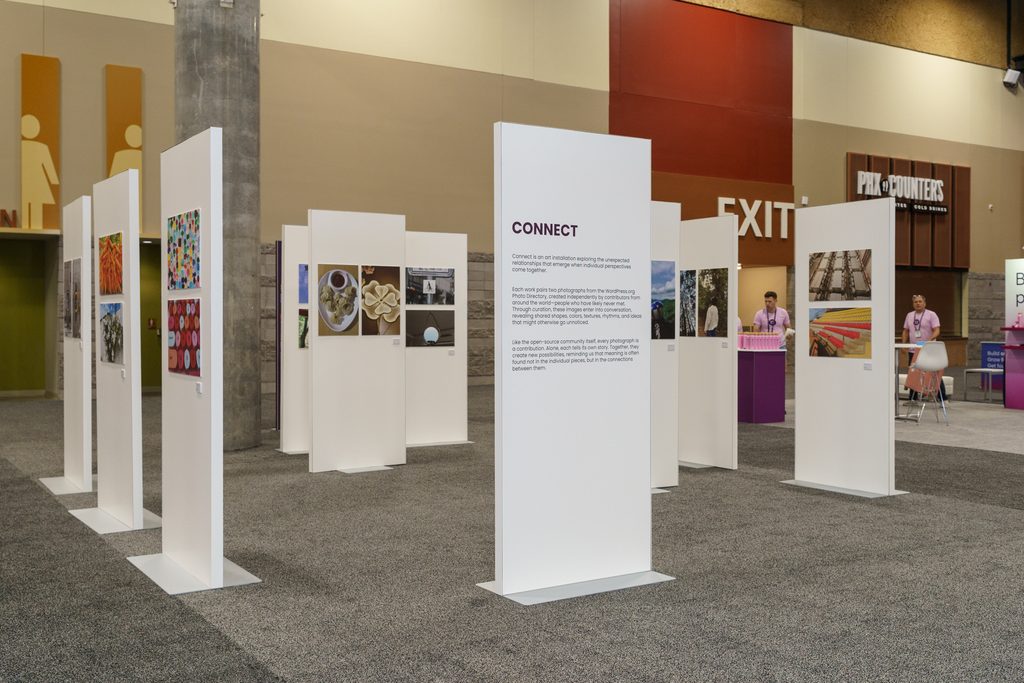
This year’s installation, Connect, was built entirely from photographs contributed to the WordPress.org Photo Directory, pairing images from photographers around the world who had likely never met into a single collaborative work. Attendees first saw the photos as a minimal gallery labeled only with contributor names, giving them a chance to spot their own connections before the curated pairings were revealed across 40 postcards, each linking two photos through color, composition, or subject. Everyone left with five or six postcards plus one blank card, an invitation to make a connection of their own or contribute a photo to the Directory.
A Word of Thanks
A huge thanks to our contributing photographers:
Allan123456789 | Alina Kakshapati | Angielina Haurylkova | appealdahal | Arata Takami | Arief Burhanuddin | Bigul Malayi | Christopher Kurth | Deepak Vijayan | genepine | Iyundhu Kennedy | Jackson Monichan | Jennifer Bourn | Krupa Nanda | LeifQ | Midhun P | Mohammed Arif | Mohammed Kateregga | Mohammad Shoeb Ansari | Nikul Valani | Nilo Velez | Nusrat | Pitam Bahadur Sen | PRABIN M | Rashed Hossain | Roberto Vazquez | Roman Khadka | Sakin Shrestha | Shaddam Hossain | Shirish Poudel | systxema | Vishnu Chandra
Lunch Time: Branching Out
On day 3, attendees started branching out from the groups they’d stuck to for the last couple of days. Lunchtime seemed to make it happen. Instead of sitting alone, people picked up an empty seat, chatted about what’s been going on over the last few days, and asked the age-old question, “What do you do with WordPress?” Conversation flowed, new friends were made, and we discovered that we have far more in common than we previously thought.
Trust, Oversight, and the Rise of the Machine Participant
The day’s sessions kept circling two related problems. The first was what changes when AI agents start acting on sites directly instead of just reading them, and what gets lost when building becomes effortless. The second was how anyone in the ecosystem proves they are trustworthy, whether that means a host, a plugin, or a developer.
AI moved from novelty to infrastructure, with machine agents becoming active participants rather than passive visitors, submitting carts, initiating payments, reshaping discovery, and rearchitecting the platform itself. But production became almost too easy, so design systems drifted to intent rather than appearance, and machine translation produced output that was technically correct and completely wrong. The answer, repeatedly, was to keep human oversight deliberately in the loop.
The second thread was trust, and who gets to claim it. The tools surfacing vulnerabilities faster were equally available to attackers, making supply-chain discipline and plugin audits non-negotiable, while a hosting trust seal and a new developer certification framed trust as something that could be earned and proven. Running alongside was a quieter question of professional identity, from the person who became their company’s sole WordPress owner by default to the agencies that stopped selling WordPress expertise and started selling outcomes.
Watch Today’s Sessions
Today’s sessions are available to view on WordPress’ YouTube channel.
Photo Highlights